

It’s been a season of finding my way through the fog, listening for what’s next, and learning to make room for things I can’t quite see yet. Some days, I feel like I’m getting closer to the new path. Things begin to clear, and I can almost make out where I’m headed. And then there are weeks when the fog rolls back in, thick enough that I can’t see very far ahead. I feel stuck, unsure of how to move forward, and wonder if I’m making any progress at all.
This is threshold space.
It’s that feeling of being in between. You know you’ve left a place of comfort and familiarity, but you’re not yet sure where you’ve arrived or where you’re supposed to go next. Something has changed. You can’t quite go back, and whatever comes next hasn’t fully arrived.
We often think of a threshold as the line we cross to get from one place to another.
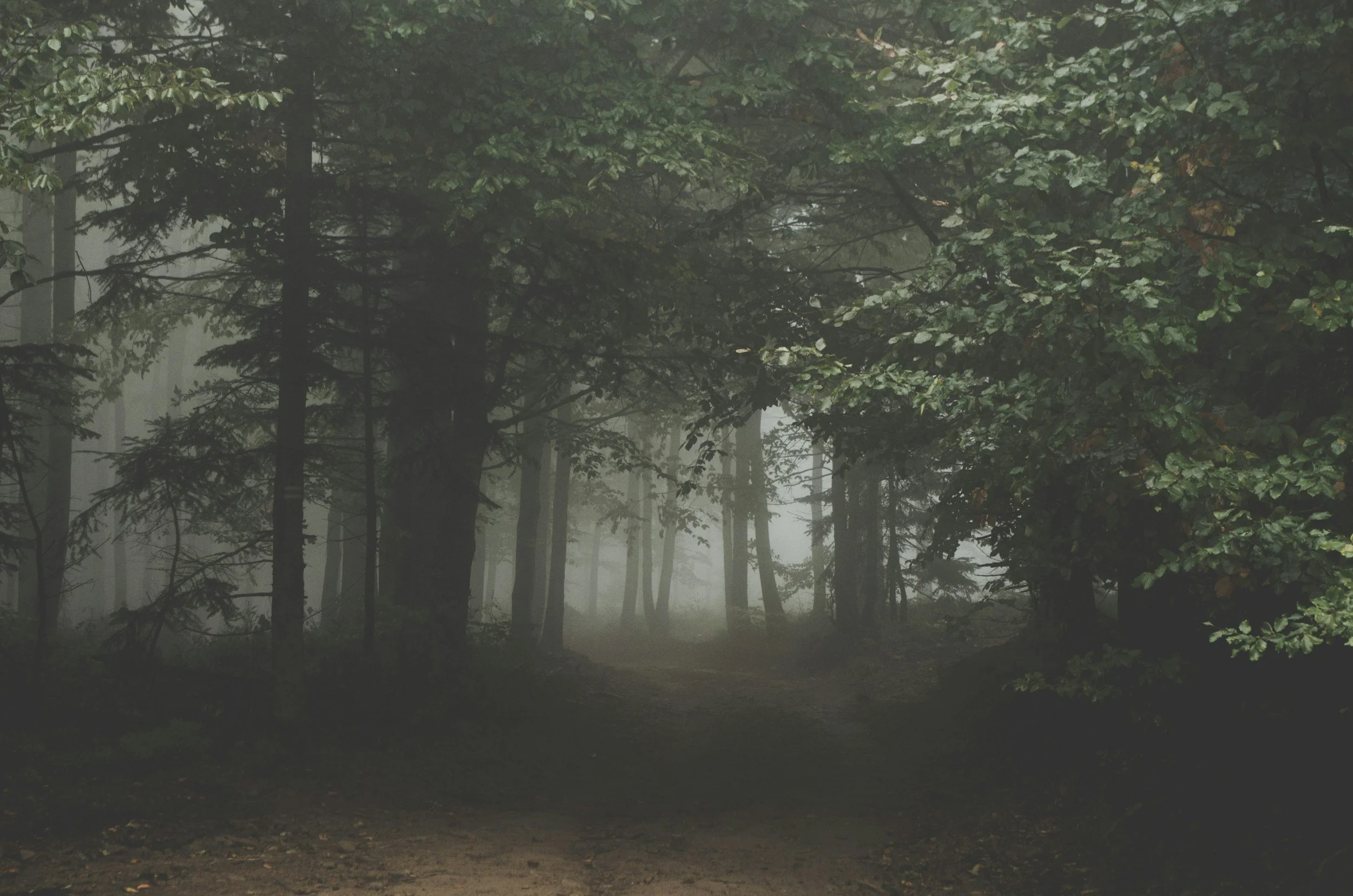
But what if the threshold is also a place in its own right?
A space to pause, to catch our breath, to notice what has happened and to begin to make sense of what it means.
We sometimes call this liminal space. It describes the place between one state and another, when the old way of being has loosened its hold, but the new way hasn’t yet taken shape. We are no longer quite who we were, but we may not yet know who we are becoming.
And that can be deeply disorienting.
When life shifts beneath our feet
Over the last few years, I've found myself navigating several thresholds.
Midlife has brought changes in my body and capacity. Perimenopause has arrived, and my body has been letting me know that things are changing. My patterns, my energy, and what I can manage are not quite what they once were. New symptoms have become invitations to pay attention, to listen differently, and to reconsider what I need.
I've experienced the loss of two jobs, neither of which was my choice. One was particularly traumatic. Alongside the practical and emotional consequences of those losses, I've found myself questioning who I am when I'm no longer carrying particular professional titles, and what happens when my character and sense of self feel shaken by experiences I didn't choose.
And then there has been the death of my mother. Losing her has shifted something in my identity as a daughter and a caregiver. It has opened up space to reflect on the roles I carry, and the ways I understand myself in relationship to others.
Sometimes we enter this space through a change we have chosen. A new relationship, a move, a change in work, a decision to leave a faith tradition, or a conscious desire to live differently.
Other times, the threshold arrives without our permission. A death. A job loss. A diagnosis. A change in our physical or mental health. A relationship that shifts or ends. A role we can no longer carry in the same way.
Sometimes we welcome these changes. Sometimes we fight them. Often, we feel a bit of both.
What makes a threshold so challenging is that it can unsettle the very things we rely on to orient ourselves: our sense of who we are, where we belong, what makes us feel safe, and what we can count on.
It’s not always just a change in circumstances. Sometimes something deeper is being rearranged. We begin to see ourselves, our relationships, or our lives differently. Things we once tucked away or learned not to question start asking for our attention. We may find ourselves grieving not only what we’ve lost, but also the person we thought we were supposed to be.
And we don’t necessarily know what to do with any of it.
The temptation to rush through
When we find ourselves in this in-between space, it can be tempting to rush toward certainty.
We want a plan. An answer. A new identity to settle into, a clear direction, some reassurance that we’re going to be okay. We want to know what all of this means and how to make it stop feeling so uncomfortable. I understand that longing. I feel it myself.
But I wonder what might happen if we gave ourselves permission not to know just yet.
What if we didn’t treat the threshold as a problem to solve, but as a place that deserves our attention?
There is so much we may need to unpack here. What happened? What changed? What did we lose? What are we carrying that no longer belongs to us? What parts of ourselves have been waiting for room to breathe? What do we want to bring with us, and what are we ready to leave behind?
These aren’t always questions we can answer by thinking harder. Sometimes we need time to feel our way through them.
We might need to listen to our bodies, notice what makes us come alive and what leaves us feeling depleted, pay attention to the stories we tell ourselves, or make space for the feelings we’ve been trying to push aside. We might need to sit with grief, anger, relief, uncertainty, or even excitement about what could be possible.
We might need to offer ourselves a little compassion for the ways we learned to survive, and a little gratitude for the parts of us that got us this far.
This is the work of the threshold. Not finding a quick answer, but allowing ourselves to be changed by what we’re experiencing.
Finding our way through the fog
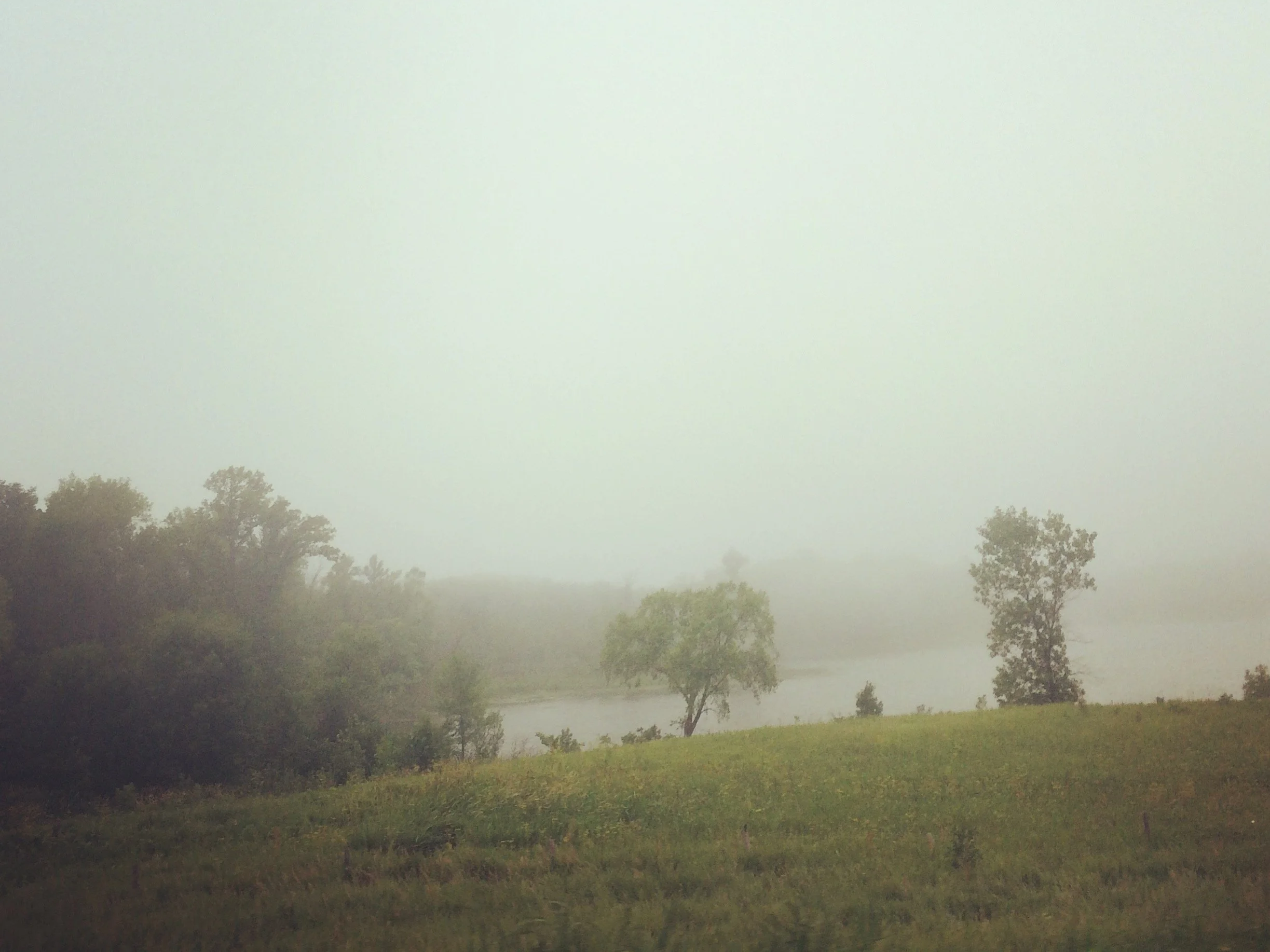
I keep coming back to the image of fog.
When we’re in it, we can’t see the whole landscape. We may only be able to make out a few steps ahead. The path we thought we were on disappears, and the landmarks we relied on no longer help us find our way. It’s easy to assume that because we can’t see the path, we must be lost.
But perhaps not knowing is part of the process. Perhaps we are being asked to find different ways of orienting ourselves.
Instead of looking for the one right answer, we can begin by noticing what is here. What feels true today? What does our body seem to be telling us? What brings a little more space, connection, or possibility? We may not get a grand revelation. We may simply notice one small thing at a time.
A conversation that helps us see something differently. A moment when we feel more like ourselves. A boundary we’re finally ready to name. A new possibility that feels worth exploring, even if we don’t yet know where it will lead.
Slowly, the landscape begins to take shape. Not necessarily because the fog has lifted completely, but because we’re learning to trust ourselves as we move through it.
And sometimes, the most important thing we can do is stop moving for a while. Rest. Let ourselves be where we are. We can simply begin where we are, with whatever we have available to us today.
A place to land
One of the things I’ve come to understand is how isolating threshold spaces can feel.
We may know that something has changed, but struggle to explain it to the people around us. We may feel different from who we used to be, without knowing how to live into that difference. The relationships, communities, or belief systems that once helped us feel grounded may no longer feel like places where we can fully belong.
We can find ourselves longing for someone who understands that we’re in the middle of something — someone who won’t rush us toward a solution or tell us who we should become.
This is the kind of space I want to offer in my work.
A place to land in the midst of change. A space to reconnect with your body, your voice, your wisdom, and yourself. A place where you don’t have to arrive with everything figured out, where you can bring the questions, the grief, the uncertainty, and the possibilities that are beginning to emerge.
I’m not here to tell you which way to go. I’m here to accompany you as you find your own way.
Through body-based work, reflection, and making room for what is asking for your attention, we can begin to listen for what feels true and discover what might support you in moving forward.
Sometimes that means sitting with what has ended. Sometimes it means reconnecting with a part of yourself you’ve lost touch with. Sometimes it means allowing yourself to imagine a future that looks different from the one you once expected.
And sometimes it means simply having somewhere to be while you don’t know.
The beauty in the fog
This morning, I opened the shades and my breath caught. Outside, rolling billows of fog were moving across the park behind my house, softening the edges of everything I could see. It was beautiful. Mysterious. For a moment, I wasn't thinking about finding my way through the fog. I was simply taking it in.
I wonder if there's something here for us. We can spend so much energy wishing the fog would lift, wanting to see what's ahead and find our way to firmer ground. And yet, perhaps there are things worth noticing right here, in the midst of not knowing.
The mystery. The unexpected beauty. The possibility that something is taking shape beyond what we can see.
Sometimes it's found in a moment that takes our breath away, reminding us that not everything needs to be figured out to be meaningful. There is still beauty here. There is still life unfolding. And perhaps we can learn to meet the unknown with a little more curiosity, and even a sense of wonder.
Perhaps we honour the work of the threshold by resisting the urge to rush too quickly into certainty. We give ourselves room to be curious, to notice what has changed, to gather what we’ve learned, and to listen for what is ready to emerge. There is wisdom in pausing, listening, and allowing the next part of the story to unfold in its own time.
We take our time. We listen for our own wisdom.
And, slowly, we begin to see a little more clearly through the fog.
If you find yourself in an in-between season of your own, I hope you can offer yourself some room to be where you are. You don’t need to know exactly where you’re going. You don’t need to have the next chapter written before you’re allowed to begin.
Trust and courage, my friends.
With much love,
Ramona
